Pillar guide · Roktops Worksurfaces · Published
Choosing the best kitchen worktops for your home
The best kitchen worktops are the ones that suit your cooking habits, design and willingness to maintain them. There is no single material that wins on every measure. A surface that makes sense in a lightly used kitchen may be the wrong choice for a busy household that wants a simple cleaning routine.
This UK buying guide compares the main decisions behind new kitchen work surfaces: material, appearance, care, layout and fitting. Roktops fabricates worktops in Reading for Berkshire and surrounding-area projects. The advice is useful when comparing options across the UK; installation availability should be discussed for your particular address.
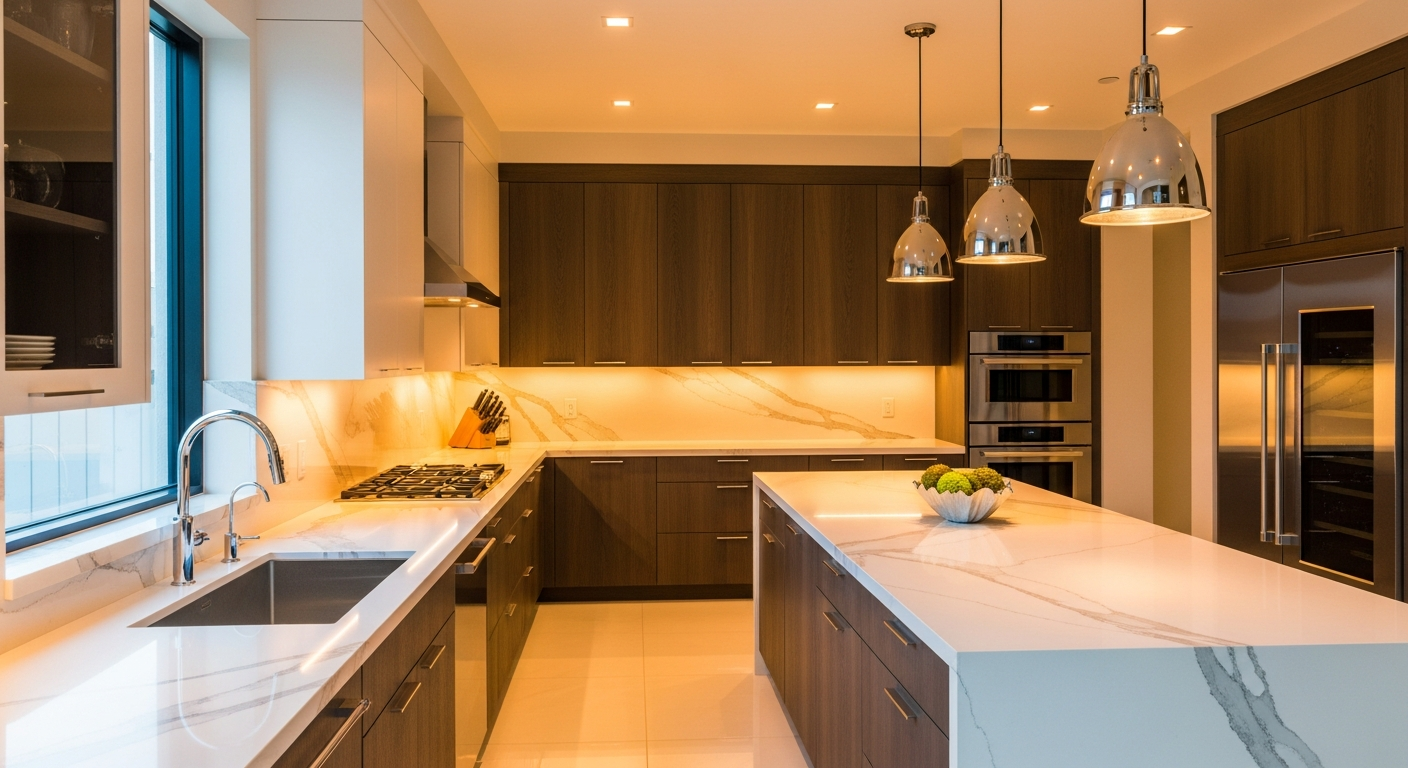
Start with the way your kitchen is used
Write down what happens on the surface each day. Consider food preparation, baking, homework, hot cookware, coffee equipment and entertaining. Be realistic about spills and cleaning. If occasional marks would bother you, discuss that before falling in love with a material that naturally changes with use.
Identify the most important practical requirements before choosing a colour. You might value a less visually busy finish, a particular edge profile, a long island or the ability to discuss refinishing with a specialist. Rank these priorities so you can make a sensible trade-off rather than expecting one surface to do everything.
- Choose your preferred care routine before comparing samples.
- Tell the fabricator about sinks, taps, hobs and unsupported overhangs.
- Separate essential layout requirements from optional decorative details.
Compare stone worktops and manufactured surfaces
Stone worktops are not one uniform category. Granite and marble are natural stones, while engineered quartz combines mineral content with binders. Porcelain and acrylic-based solid surface are different products again. Ask which exact product is being proposed and follow its own technical guidance.
| Material | What to consider | Useful question |
|---|---|---|
| Granite | Natural pattern and slab variation; care depends on the stone and finish. | Does this particular slab need sealing and which cleaner is appropriate? |
| Quartz | Engineered colours and patterns; follow product guidance on heat and chemicals. | What is included in the fabrication and fitting specification? |
| Marble | Natural veining, possible etching and a developing patina. | Will I be comfortable with visible signs of use? |
| Porcelain | Product-specific cutting, edge and support requirements. | How will edges, joints and appliance openings be detailed? |
| Corian solid surface | Different appearance and joining options from stone. | What can be formed or refinished in this particular design? |
Choose colour and pattern in context
Compare samples beside the cabinet doors, floor and wall finishes, ideally in the room's daylight and evening lighting. An online image is not a reliable colour reference. A white quartz worktop can appear warm or cool depending on undertone, surrounding finishes and the colour temperature of your lights.
Natural-stone slabs vary, and a small sample cannot show the whole pattern. Discuss how large veins might run across an island, turn at a corner or meet a splashback. Ask what can reasonably be aligned and where joints may interrupt the pattern. Do not assume a photograph guarantees a matching slab or an invisible joint.
Turn the layout into a fabrication specification
A cabinet plan is the beginning of a worktop discussion, not a final cutting template. Confirm the sink and hob models, tap positions, upstands, splashbacks and any draining details. Edge profiles and overhangs can affect both the appearance and the work required.
Discuss supports and installation access early. Large pieces may need to pass through doors, around corners or up stairs. Joint positions depend on the material, slab dimensions, handling and room layout. A simpler layout can sometimes preserve the finish you want more effectively than changing to a different material.
Plan the care routine before installation
Use chopping boards and suitable heat protection rather than assuming a hard surface is immune to damage. Obtain cleaning advice for the named product and finish. Avoid treating a generic online statement such as 'stain-proof' or 'maintenance-free' as a substitute for the supplier's instructions.
Ask about sealing where relevant, compatible cleaners, accidental damage and the process for getting specialist advice. A household that wants to avoid patina may choose differently from one that values the changing character of natural marble. Neither preference is wrong; the important step is making an informed choice.
Compare complete quotes, not headline material prices
Ask each supplier to quote against the same layout and inclusions. A slab-only or per-square-metre price may exclude templating, fabrication, cut-outs, edge finishing, delivery and installation. Establish whether VAT, removal and plumbing are included, excluded or the responsibility of another trade.
For a Roktops enquiry, send an approximate plan, project address, preferred materials and the appliance models you have chosen. Tell us whether the cabinets are new or staying in place. That gives the Reading team a useful starting point for discussing a practical specification rather than an unsupported headline price.
Questions about this topic
Which kitchen worktop is best for a busy home?
Start with the cleaning routine, appearance and detailing you need. Compare the exact quartz, granite, porcelain or solid-surface products available, rather than assuming a material category is universally best.
Can I use this guide when comparing kitchen worktops elsewhere in the UK?
Yes. The material and specification questions apply broadly to UK projects. Roktops is based in Reading; discuss installation coverage for your address rather than assuming nationwide fitting.
Should the worktop or cabinets be chosen first?
Develop them together, then agree the installation sequence with the fabricator and kitchen fitter. Cabinet position, supports, appliance specifications and wall details affect the final worktop measurements.