Outdoor Worktop Materials: Sun, Frost and Water
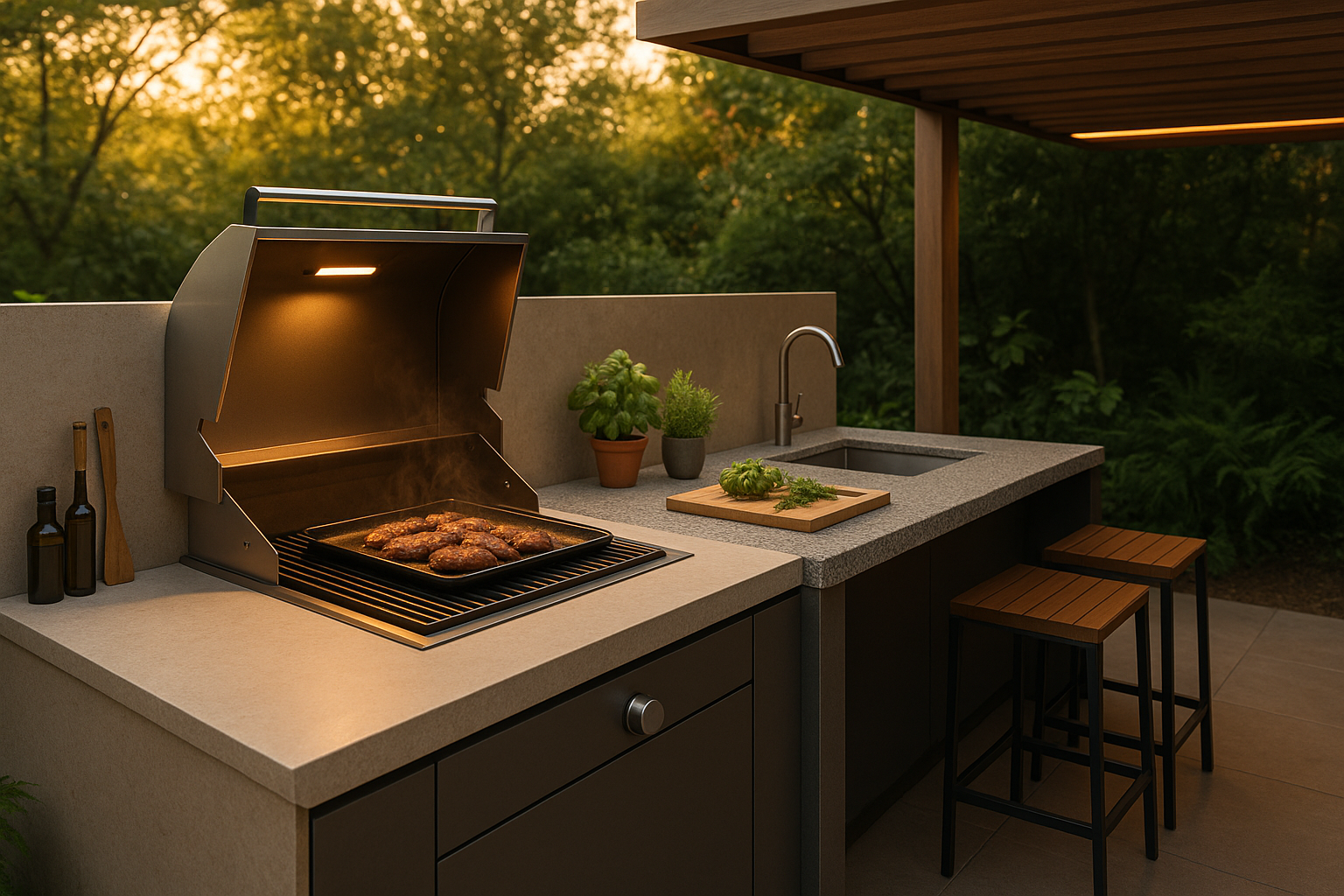
Understand UV exposure, frost, water absorption and thermal movement when comparing outdoor worktop materials.
Outdoor worktop materials need weather resistance as well as an attractive finish. Sun, frost and water affect a garden surface differently from a worktop inside a heated kitchen. Choose a product that its manufacturer approves for the actual exposure at your installation.
Sunlight and UV exposure
An uncovered worktop can receive direct sunlight for long periods. Some resin-based indoor surfaces are not approved for that use because their appearance or performance can change outdoors. Do not assume that a product sold for kitchen worktops is also an outdoor product.
Porcelain and suitable sintered surfaces are commonly specified for exposed settings. Check the particular range, finish and installation instructions rather than relying on the broad material category.
Frost, rain and standing water
Rain needs a route away from the worktop and its supporting structure. Joints, cut-outs and abutments should be detailed for the setting, with the base and cabinets also suitable for outdoor use.
Granite can be a practical natural-stone option, but absorption and sealing requirements vary between stones and finishes. Ask what maintenance the selected slab needs. A sealer is not a substitute for correct drainage or sound installation.
Thermal movement and support
A surface warmed by sunlight and later cooled by rain experiences changing conditions. Its support, joints and relationship to surrounding masonry need to account for movement. Larger spans and appliance cut-outs also affect the fabrication plan.
Follow the appliance maker's heat clearances and use protection for hot cookware. Heat resistance does not mean that any slab can tolerate unlimited, sudden temperature changes or direct contact with a flame.
Compare the maintenance commitment
Porcelain generally offers a low-absorption surface, while the care routine for granite depends on the stone and treatment. Neither material makes an outdoor kitchen maintenance-free. Remove food residues and leaves, clean with an appropriate product and inspect joints as part of seasonal care.
Read the current care and warranty information for the named product before committing. Ask whether exposed edges, finishes and outdoor use are covered by the specification you have been offered.
Make a product-specific shortlist
Compare porcelain worktops with granite worktops, then discuss your exposure and supporting structure with Roktops. For the separate decisions about appliances and access, use the outdoor kitchen planning checklist.
Our outdoor kitchen worktops service covers the fabrication discussion; this guide is intended to help you ask the right material-performance questions first.
Review the whole assembly before ordering
Ask how the proposed top, support and appliances will work together through seasonal changes. The material description alone does not explain the installation detail at a wall, around a grill or over a cabinet opening. Keep the manufacturer's outdoor-use guidance and appliance requirements with the project specification so different trades are not working from incompatible assumptions.
When comparing porcelain worktops with suitable granite worktops, discuss the actual product and exposure rather than choosing solely from general heat or stain claims. Identify whether the site is covered, shaded or open to rain and direct sun. Ask what cleaning and winter checks are recommended for the selected installation, including attention to joints and drainage.
Our outdoor kitchen worktops page lists the practical information needed for a fabrication enquiry. Contact the Reading team with the proposed layout, grill model and photographs of the installation area. Include access from the road to the garden: delivery and handling constraints can influence the feasible size and arrangement of the pieces before the design is final.