Bathroom Vanity Worktops: Marble, Granite, Quartz, or Porcelain?
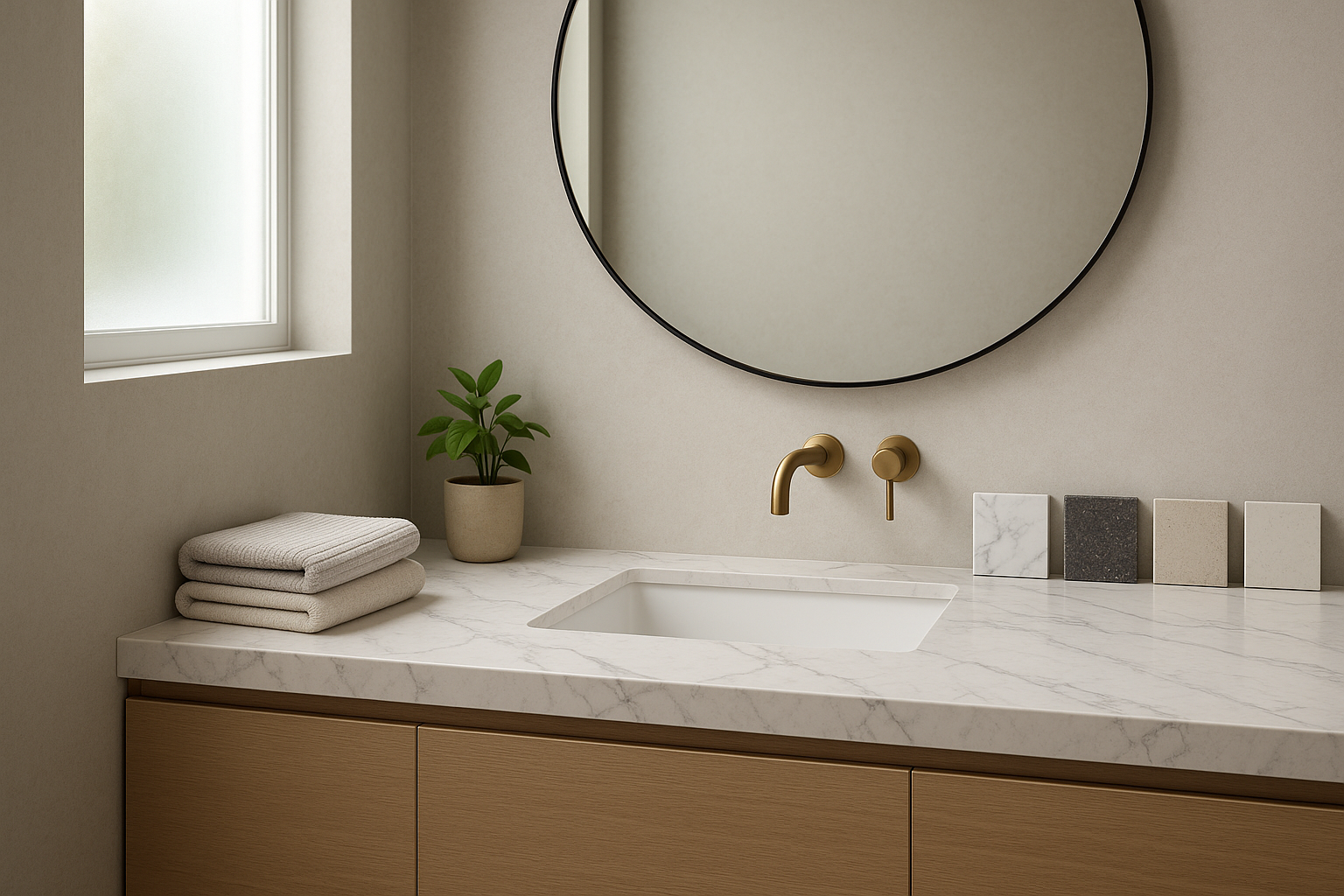
Shopping for bathroom vanity worktops? Compare marble, granite, quartz, and porcelain, see the pros and costs, and learn how to choose with confidence.
Bathroom vanity worktops
Your bathroom should feel like a little daily luxury, not a maintenance chore. If you’re choosing bathroom vanity worktops and torn between the romance of marble and the practicality of quartz (or the rock-solid appeal of granite and porcelain), you’re in the right place. In a few minutes, you’ll know what to pick, why it fits your home, and how to keep it beautiful for years—whether you’re renovating a city flat or upgrading a family home near you.
Ready to take the next step? Book a design consultation to explore finish samples and get tailored advice.
Quick summary: choosing bathroom vanity worktops with confidence
- Marble = timeless luxury, softer and more porous; best for low-splash, careful households
- Granite = natural strength, great heat/scratch resistance with unique veining
- Quartz = low‑maintenance hero, non‑porous, consistent patterns, everyday friendly
- Porcelain = ultra‑durable, thin yet tough slabs, heat/UV/stain resistant
- Match your lifestyle first, then pick the look—form follows function brilliantly
Marble bathroom worktops vs other bathroom vanity worktops
Love the look of luxury hotel suites? Marble bathroom worktops bring that soft, elegant veining and cool-to-the-touch feel. But compare before you commit:
- Marble: Dramatic veining, naturally cool, undeniably premium. Needs sealing, and it can etch from acids (think skincare spills). Best for design-led spaces with mindful upkeep.
- Granite bathroom worktops: Natural stone beauty with more scratch and heat resistance than marble. Sealing is wise, but it’s a hardy, long-term choice for busy homes.
- Quartz bathroom worktops: Engineered, non-porous, and ultra consistent in color/pattern. Fantastic for low-maintenance bathrooms—resists stains from makeup, soaps, and toothpaste.
- Porcelain bathroom worktops: Sintered slabs that are thin, light, and very tough. Excellent stain, heat, and UV resistance; ideal for sleek, modern vanities and wall cladding.
Pro tip: If you crave the veining of marble without the worry, explore marble‑look quartz or porcelain—you’ll get the drama with far less upkeep.
Book a design consultation to compare real slabs and samples side by side in your preferred lighting.
How to shortlist bathroom vanity worktops in 3 steps
1. Define where and how you’ll use it
- Guest loo (light use) vs. family bathroom (daily splash zone)
- Splash risk from taps and skincare; ventilation and natural light exposure
- Desired edge profile, thickness, and overhang for your vanity unit
2. Prioritise performance over patterns (at first)
- Need zero‑fuss care? Start with quartz or porcelain
- Want natural movement and uniqueness? Shortlist marble and granite
- Require heat and UV resistance (sunny rooms)? Granite or porcelain shine
3. Lock the look and finish
- Choose finish: polished (mirror-like), honed (satin-matte), or leathered (textured)
- Coordinate with taps, tiles, and mirror frames; bring a tile swatch when choosing
- Confirm edges, splashbacks, and cut-outs (taps, basins) before templating
Bathroom vanity worktops: care, durability, and cost
- Daily care: Wipe with mild soap and water; avoid harsh acids. Blot spills quickly—especially on marble.
- Sealing: Marble and granite typically benefit from periodic sealing; quartz and porcelain are non‑porous and don’t need it.
- Durability:
- Marble: softer, can etch—beautiful but needs care
- Granite: resilient natural stone
- Quartz: tough, consistent, stain-resistant
- Porcelain: highly resistant to heat, stains, and UV
- Cost guide (relative):
- $ = porcelain (thin formats) and some quartz lines
- $ = popular quartz colours; select granites
- $$ = premium granites; specialty porcelains
- $$ = high‑grade marbles and rare stones
If you’re weighing budget vs. wow-factor, a marble backsplash panel with a quartz vanity top blends drama with practicality.
Bathroom vanity worktops FAQs
Is marble worth it for a busy family bathroom?
If you’re meticulous and love patina, yes. For carefree daily use, consider quartz or porcelain to avoid etching and frequent sealing.
Do bathroom vanity worktops need sealing?
Marble and many granites benefit from periodic sealing. Quartz and porcelain are non‑porous and don’t require it.
What thickness is best for a vanity top?
Common choices are 20 mm or 30 mm. Thicker looks bolder; thinner porcelain can still be incredibly strong and sleek.
Can I put a hot hair tool on the surface?
Use a heat mat. Granite and porcelain handle heat better; quartz and marble can be damaged by prolonged high temperatures.
How do I prevent stains around the basin?
Seal (if applicable), wipe daily with mild soap, and use trays for skincare. Non‑porous quartz/porcelain are the most stain-resistant.
Choosing the right bathroom vanity worktops for your home
You deserve a vanity that looks gorgeous on day one—and stays that way. Whether it’s the timeless allure of marble bathroom worktops, the rugged beauty of granite, or the effortless care of quartz or porcelain, match the material to your lifestyle and you’ll love the result every morning.
Ready for personalised guidance and a clear quote? Book a design consultation to see finishes in person and finalise your bathroom vanity worktops with confidence.