Bathroom Vanity Worktops: Find the Perfect Fit for Style and Splash-Proof Living
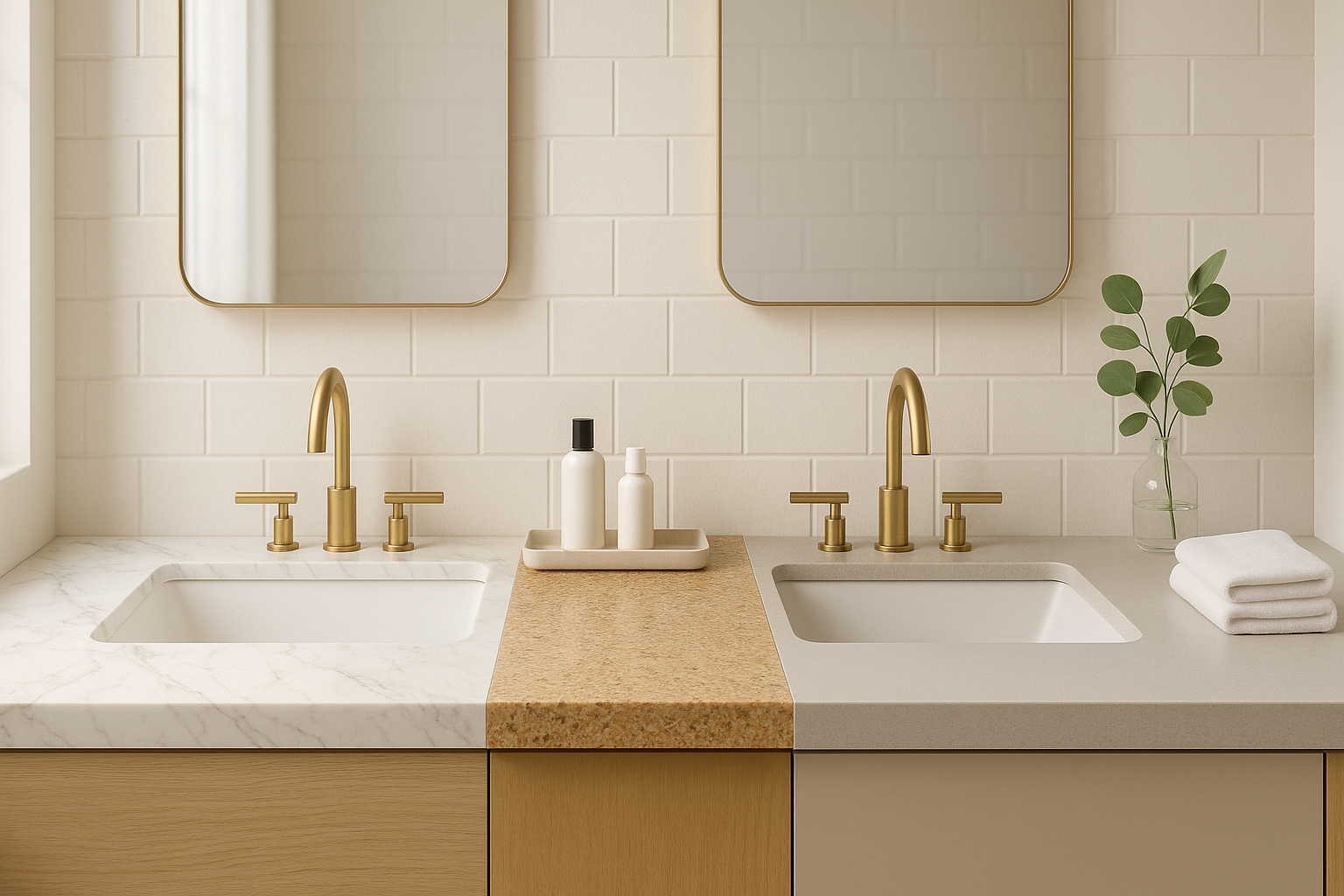
Choosing bathroom vanity worktops shouldn’t be confusing. Compare quartz, granite, marble, and porcelain—then follow simple steps to pick the right one.
If water spots, makeup stains, and endless wiping are stealing the joy from your morning routine, it’s time to rethink your bathroom vanity worktops. The right surface looks gorgeous, shrugs off splashes, and makes clean-up blissfully quick. Ready to get practical and stylish? Book a design consultation to explore your options and bring your bathroom vision to life.
Quick summary: choosing bathroom vanity worktops
- Quartz is the go-to for low-maintenance durability; granite is hearty and natural.
- Marble delivers timeless luxury, but needs gentle care.
- Porcelain is slim, strong, and ultra-hygienic, great for modern looks.
- Match the material to your lifestyle, budget, and style—then confirm professional installation near you.
Best materials for bathroom vanity worktops
Quartz bathroom worktops: Engineered stone that’s non-porous, highly stain-resistant, and easy to care for. Ideal for busy family bathrooms and rental properties.
- Pros: No sealing, consistent patterns, excellent durability.
- Consider: Not ideal for placing very hot tools directly on the surface.
Granite bathroom worktops: Natural beauty with unique movement and character. Properly sealed, granite resists most bathroom spills.
- Pros: Distinctive look, strong and long-lasting.
- Consider: Periodic sealing maintains performance.
Marble bathroom worktops: Classic veining and soft elegance. Beautiful in ensuites or low-traffic spaces.
- Pros: Unmatched luxury, brightens small rooms.
- Consider: Etching and staining can occur—use pH-neutral cleaners and seal regularly.
Porcelain bathroom worktops: Thin, sleek slabs with excellent heat and scratch resistance. Great for wall-to-vanity cladding and minimal seams.
- Pros: Lightweight, hygienic, UV-stable for bright spaces.
- Consider: Edges can chip if mishandled; expert fabrication is key.
Craving samples and side-by-side comparisons? Book a design consultation to see finishes in person and get tailored advice for your space.
How to choose bathroom vanity worktops that fit your life
1. Define your look
Decide on warm and organic (granite or certain quartz patterns), crisp and modern (porcelain), or classic and luxe (marble). Bring tile, paint, and hardware swatches for harmony.
2. Match material to use
Heavy makeup routines and kids’ toothpaste trails call for stain-resistant, easy-care options like quartz or porcelain. Light-use ensuites can embrace marble’s elegance.
3. Set a realistic budget
Plan for the slab, fabrication, edges, backsplash, cut-outs, and installation. Porcelain and quartz often balance cost with performance; marble and certain granites vary by rarity.
4. Choose the right finish and edge
- Finishes: Polished (bright, reflective), honed (soft matte, hides smudges), leathered (subtle texture).
- Edges: Square, eased, or bevel for modern lines; ogee for classic detail.
5. Confirm practical details
Check tap hole positions, basin type (undermount or vessel), and splashback height. Measure twice, install once—with professional fitters in your area.
Bathroom vanity worktops costs and care tips
- Costs vary by material rarity, thickness (20mm vs 30mm), edge profile, and fabrication complexity (cut-outs, curves). Request a detailed, itemised quote to compare fairly.
- Day-to-day care:
- Use mild, pH-neutral cleaners and soft cloths.
- Wipe spills promptly—especially on marble.
- Avoid abrasive pads; use trays for cosmetics and hot tools.
- Follow sealing schedules for natural stone to keep protection strong.
Bathroom vanity worktops FAQs
Which is best: quartz, granite, marble, or porcelain?
For most busy homes, quartz balances beauty and low upkeep. Granite suits natural-look lovers, marble shines in low-traffic luxe spaces, and porcelain wins for slim, modern, hygienic designs.
Are quartz bathroom worktops heat and stain resistant?
Quartz is highly stain resistant and handles daily heat well, but use a mat under very hot tools to protect the resin binders.
Can I install bathroom vanity worktops myself?
Small tops might tempt DIY, but professional templating and installation ensure accurate cut-outs, level seams, and a perfect fit—especially for porcelain and natural stone.
What thickness should I choose for a vanity?
Common choices are 20mm for a sleek profile or 30mm for a chunkier statement. Porcelain often achieves a slim look with mitred edges that appear thicker.
How do I clean marble bathroom worktops without etching?
Use pH-neutral cleaner, blot spills quickly, skip vinegar/acidic sprays, and keep up with regular sealing.
Choosing the right bathroom vanity worktops for your space
Your countertop should work as hard as it wows. Whether you’re renovating a family bathroom near you or crafting a calm ensuite, the right choice blends style, durability, and easy care. When you’re ready, book a design consultation to compare samples, get tailored guidance, and feel confident choosing bathroom vanity worktops you’ll love for years.