Bathroom vanity worktops: why porcelain is winning
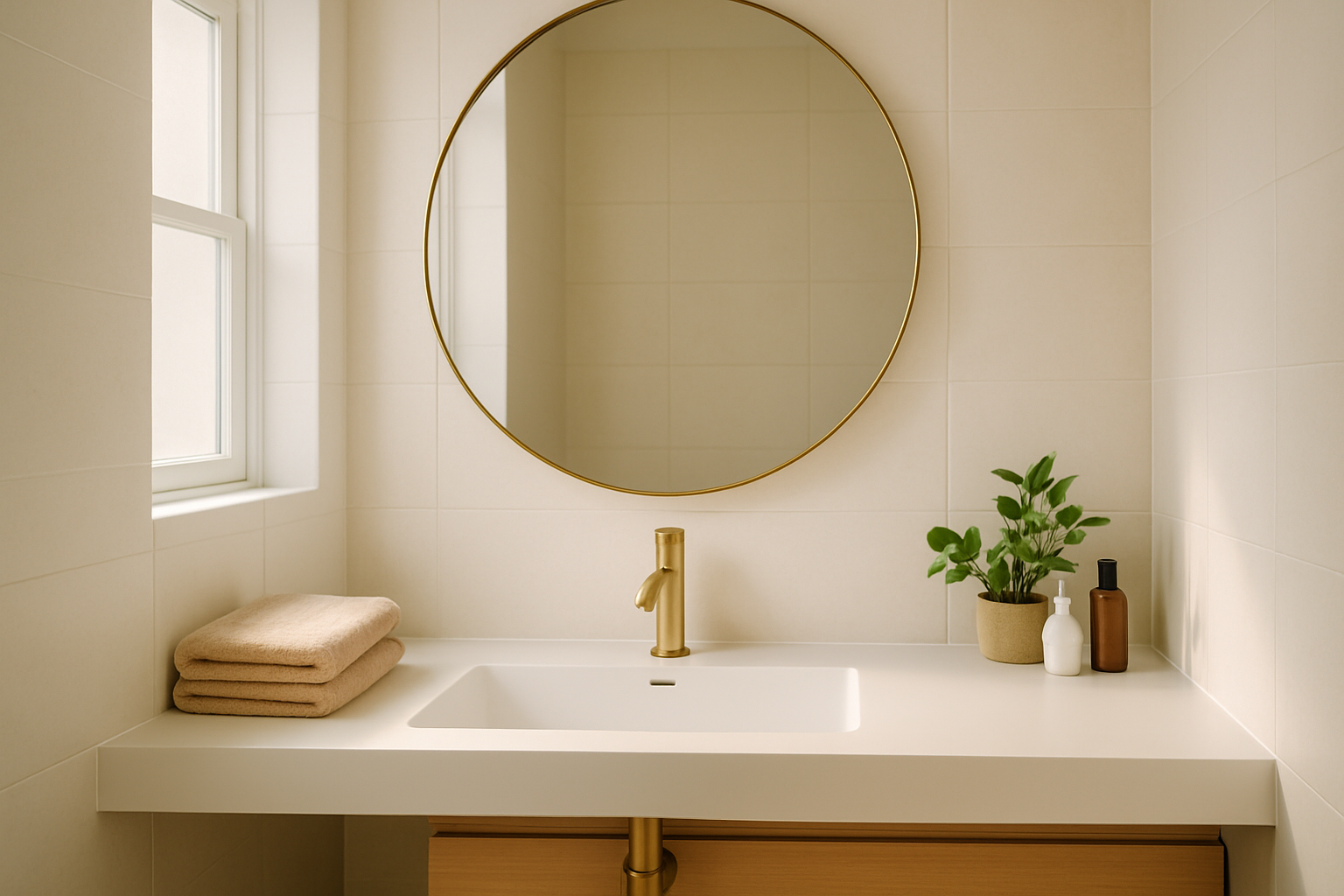
Thinking about new bathroom vanity worktops? Discover why porcelain is a sleek, low‑maintenance star—and how it compares to quartz, granite, and marble.
Bathroom vanity worktops: why porcelain is winning
Hate water marks, makeup stains, and endless scrubbing? The right bathroom vanity worktops can turn daily routines into effortless, stylish moments—especially when porcelain enters the chat. In this guide, we’ll break down porcelain bathroom worktops vs quartz, granite, and marble so you can pick with confidence near you.
Ready to explore options or get tailored advice? Book a quick bathroom worktop design chat. Want to start comparing now? Jump straight to our material comparison.
Quick summary: choosing bathroom vanity worktops
- Porcelain leads for durability, stain resistance, and ultra‑low maintenance
- Quartz is consistent and stylish, but not as heat‑tolerant
- Granite brings natural character; seal it to resist stains
- Marble is timeless and luxe, but needs gentle care
- Measure first, then sample finishes and confirm with a local fabricator near you
Porcelain bathroom worktops for busy vanities
Porcelain is an engineered ceramic fired at high temperatures, and it’s a dream for splash‑zones.
- Exceptionally hard and scratch‑resistant—ideal for daily traffic
- Non‑porous and stain‑proof against makeup, hair dye, and toothpaste
- Heat and UV resistant—great under bright window light
- Slim, sleek profiles using large‑format slabs for a modern look
- Design versatility from stone‑look veining to concrete and matte whites
Bonus: maintenance is simple—just mild soap and water. No sealing. No drama.
Comparing bathroom vanity worktops: porcelain, quartz, granite, marble
Porcelain bathroom worktops
- Pros: Ultra‑low maintenance, heat/UV/stain resistance, thin profiles
- Consider: Edges can chip if heavily knocked—choose a rounded edge for family bathrooms
Quartz bathroom worktops
- Pros: Consistent color, broad style range, easy day‑to‑day care
- Consider: Not as heat‑tolerant; avoid hot tools directly on the surface
Granite bathroom worktops
- Pros: Natural beauty and movement, good durability
- Consider: Typically needs periodic sealing to combat stains
-
- Pros: Iconic veining and luxury appeal
- Consider: Softer; can etch or stain—best for careful cleaners or powder rooms
Want tailored suggestions for your space and budget? Book a quick design chat for personal recommendations. Got questions? Jump to the bathroom vanity worktops FAQs.
How to choose bathroom vanity worktops
1. Measure your space
- Note vanity width/depth, sink placement, and tap holes
- Check doorways/stairs for slab access if using stone or large porcelain
2. Match material to lifestyle
- Heavy use, kids, rentals: porcelain or quartz
- Natural‑stone lovers ready to maintain: granite or marble
3. Pick finish and edge
- Finishes: polished for shine, honed/matte for a soft, modern look
- Edges: eased or round for durability; ogee for classic rooms
4. Plan install and lead times
- Ask local fabricators in your area about templating, cut‑outs, splashbacks, and turnaround
- Confirm warranties, care instructions, and offcut options for shelves or window sills
Bathroom vanity worktops installation and care
- Seal if needed: granite/marble may require periodic sealing; porcelain and most quartz do not
- Daily clean: mild soap + soft cloth; avoid abrasive pads
- Heat caution: safe trivet or mat for hot styling tools, especially on quartz and marble
- Protect edges: choose rounded profiles in high‑traffic family bathrooms
- Ventilation: good airflow helps reduce moisture and mildew
Bathroom vanity worktops FAQs
Do porcelain bathroom worktops stain or scratch easily?
Porcelain is highly resistant to both. Its non‑porous surface shrugs off common bathroom stains and resists everyday scratches.
Is quartz or porcelain better for bathroom vanity worktops?
Both are low‑maintenance. Porcelain is more heat/UV tolerant; quartz offers ultra‑consistent patterns. Choose based on styling tools, sunlight, and look.
Are granite bathroom worktops hard to maintain?
Not hard—just consistent. Granite usually needs periodic sealing to stay stain‑resistant, plus standard gentle cleaning.
Will marble bathroom worktops etch with skincare acids?
They can. Marble is calcium‑based and may etch from acids. Use trays for skincare and clean spills promptly.
Can I DIY‑install a vanity worktop?
Small tops are doable for confident DIYers. For stone, quartz, or porcelain slabs, professional templating and fitting are recommended for a perfect finish.
Choosing the right bathroom vanity worktops for your home
If you want a sleek look without the upkeep, porcelain bathroom worktops are hard to beat—strong, stylish, and stress‑free. When you’re ready, book a bathroom worktop design chat to compare samples and get an easy, local install plan. Your new bathroom vanity worktops are just a conversation away—and yes, mornings really can feel calmer.