Bathroom vanity worktops: smart, stylish, and built to last
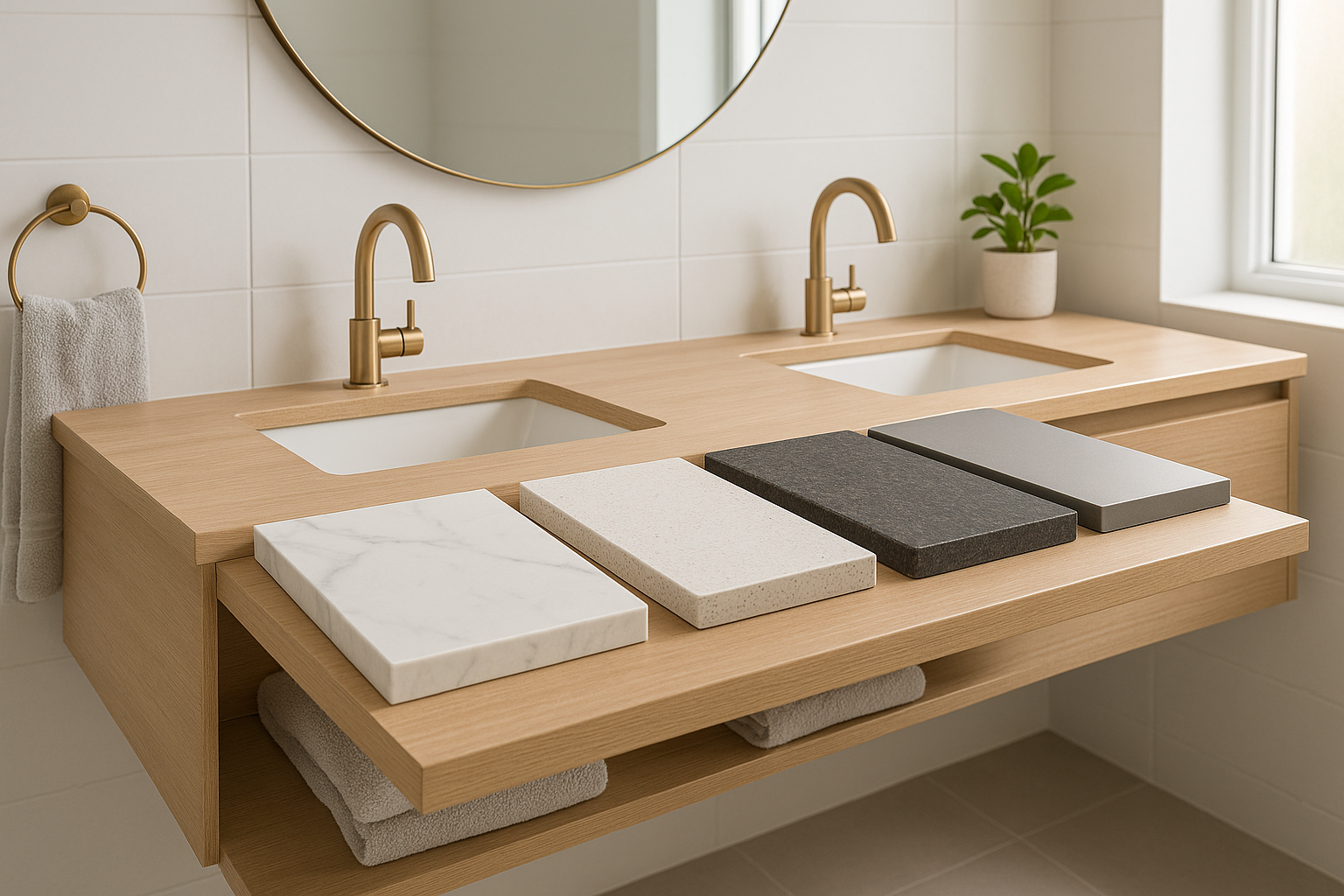
Choosing bathroom vanity worktops? Compare quartz, granite, marble and porcelain in minutes. See pros, costs, care tips — and pick with confidence.
You know the feeling: steamy mirror, busy morning, and a vanity that takes a daily beating. The right bathroom vanity worktops shouldn’t just look gorgeous — they should shrug off splashes, resist stains, and make cleaning a breeze. This guide breaks down the best options so you can choose once and love it for years.
Get a free bathroom worktop quote — tell us your size, style and timeline, and we’ll help you narrow the smartest options near you.
Quick summary: bathroom vanity worktops at a glance
- Quartz: ultra‑durable, low‑maintenance, wide colours; ideal for busy bathrooms
- Granite: natural beauty, heat resistant; seal annually for best stain protection
- Marble: timeless veining, luxe look; gentler care routine, seal regularly
- Porcelain: thin, tough, UV‑stable, realistic stone looks; excellent for sleek designs
Choosing bathroom vanity worktops: materials that matter
Quartz bathroom worktops
- Non‑porous and stain resistant; everyday low‑maintenance winner
- Huge colour range, from crisp whites to bold terrazzo
Granite bathroom worktops
- Unique natural patterns and excellent heat tolerance
- Benefits from periodic sealing to boost stain resistance
Marble bathroom worktops
- Iconic veining and luxury feel that elevates any vanity
- More prone to etching; gentle cleaners and sealing recommended
-
- Lightweight yet exceptionally hard‑wearing; great in humid spaces
- UV‑stable for windowed bathrooms; slim profiles look effortlessly modern
How to choose bathroom worktops: a simple 5‑step plan
1. Lock your look
Decide the mood: warm and natural (granite, marble) or sleek and uniform (quartz, porcelain). Snap a quick photo of your tiles and tapware for reference while you compare samples.
2. Match durability to real life
Heavy makeup, hair dye, or little splashers? Quartz or porcelain handle it best. For spa‑like spaces with lighter use, marble can be magic.
3. Get the size right
Measure vanity width, depth, and basin cut‑outs. Plan for 20–30 mm overhang and a 100–150 mm upstand/splashback where walls meet water.
4. Choose edges and details
Favourites: pencil, bevel, or eased edges for modern looks; ogee for classic charm. Confirm tap holes, undermount basin compatibility, and any shelf or window‑sill returns.
5. Confirm lead times near you
Fabrication plus templating/installation for bathroom worktops typically runs 1–3 weeks in your area. Ask about sample availability and off‑cut deals for small vanities.
Ready to compare options? Get a free bathroom worktop quote and see curated samples that fit your size, style and budget.
Bathroom vanity worktops costs and value
Here’s a friendly way to think about price tiers (varies by thickness, finish, and edge):
- Porcelain: often competitive with mid‑range quartz, great value for durability
- Quartz: mid to high; pay more for premium whites and special effects
- Granite: mid to high; unique slabs can command higher prices
- Marble: typically high; you’re paying for that iconic veining
Tip: Smaller vanities can save with remnant pieces from local fabricators.
Bathroom worktop care: keep your vanity gleaming
- Wipe daily with mild soap and warm water; avoid abrasive pads
- Blot spills quickly, especially on marble and granite
- Use pH‑neutral cleaners; skip bleach/ammonia mixes
- Seal natural stone as recommended; quartz and porcelain don’t need sealing
Bathroom vanity worktops FAQs
Is quartz a good choice for bathroom vanity worktops?
Yes. Quartz is non‑porous, highly stain resistant, and easy to clean — perfect for makeup, toothpaste, and everyday splashes. It also offers consistent colour and patterning.
Do granite or marble bathroom worktops stain easily?
Both are porous natural stones. Regular sealing and prompt wipe‑ups help a lot. Granite tends to be more forgiving; marble may etch from acidic products, so use gentle cleaners.
What thickness works best for bathroom worktops?
Common options are 20 mm and 30 mm. Thinner profiles look sleek and modern; thicker edges add presence. Ask your fabricator about edge builds that create a thicker look.
Are porcelain bathroom worktops durable in humid bathrooms?
Absolutely. Porcelain is heat, scratch, and UV resistant. Its low porosity makes it a strong pick for steamy, sunlit bathrooms — with very little upkeep.
Choosing bathroom vanity worktops with confidence
The right surface should look stunning, stand up to daily life, and be a joy to clean. Whether you love the consistent polish of quartz, the natural drama of granite, the classic elegance of marble, or the sleek strength of porcelain, you now know how to pick with confidence.
Ready to move from ideas to installation? Get a free bathroom worktop quote and start planning bathroom vanity worktops that make every morning feel a little easier.