Bathroom vanity worktops: marble vs granite vs quartz vs porcelain
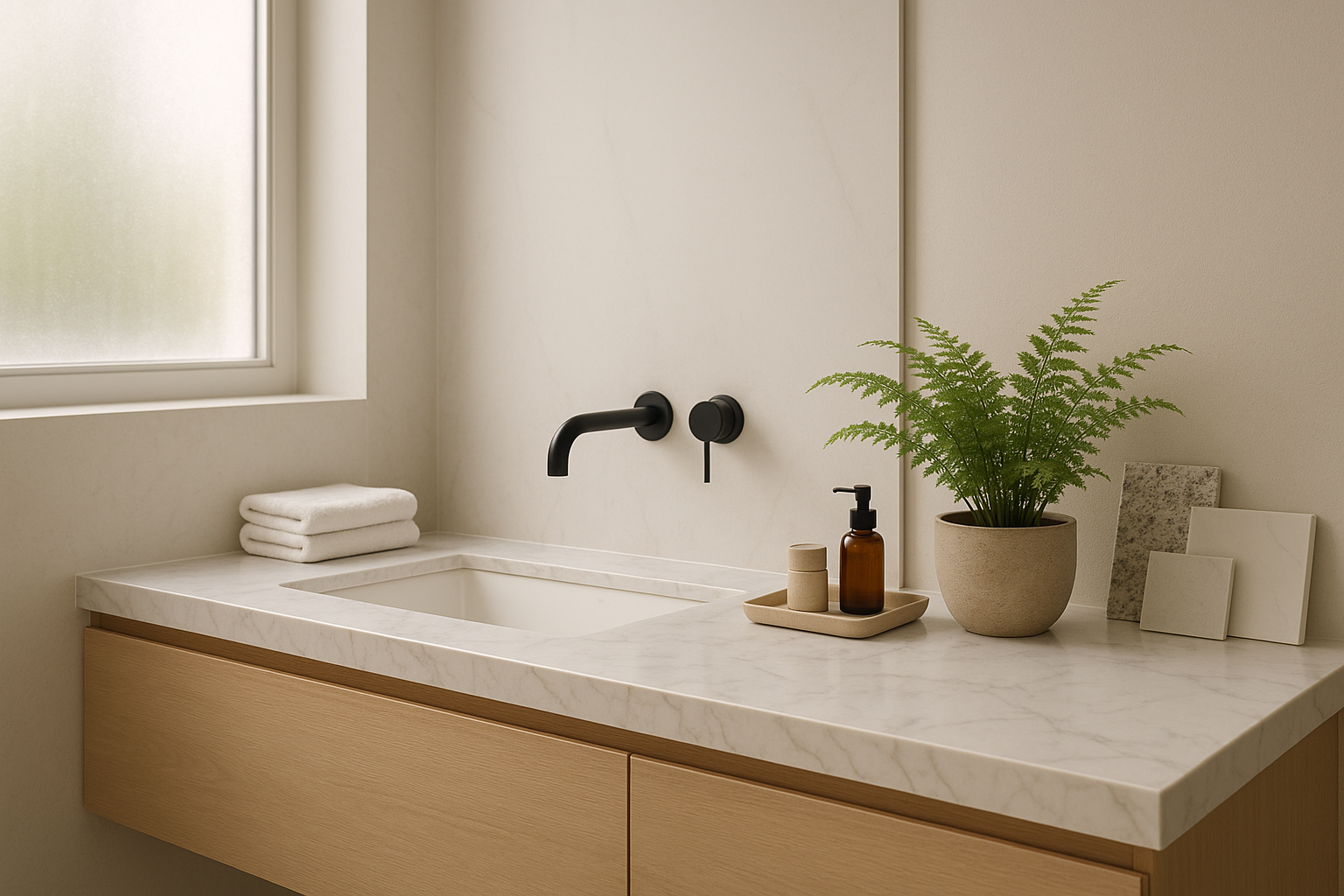
Choosing bathroom vanity worktops doesn’t have to be tricky. Compare marble, granite, quartz and porcelain—see care, costs, and quick tips to pick with confidence.
Bathroom vanity worktops
Your bathroom should spark joy before your coffee kicks in. The right bathroom vanity worktops upgrade daily routines from “meh” to “mm, nice” — and help you dodge stains, splashes, and maintenance headaches. Read on for a quick, friendly guide to marble, granite, quartz and porcelain so you can choose with confidence. Ready to move forward? Get a free worktop quote today.
Quick summary: choosing bathroom vanity worktops
- Marble = timeless luxury, but needs sealing and gentle care
- Granite = rugged natural stone with character and solid durability
- Quartz = low-maintenance hero, consistent look, super practical
- Porcelain = ultra-slim and tough, modern profiles and easy cleaning
- Pick finish, thickness, edges, and upstands that fit your space and lifestyle
Marble bathroom worktops: luxe look, real-life pros and cons
Marble bathroom worktops bring that soft, elegant veining you see all over design feeds. They’re naturally cool to the touch, pair beautifully with brass or matte black, and make small spaces feel special.
- Pros: iconic veining, brightens rooms, classic appeal
- Cons: porous, prone to etching from acids (think skincare), needs sealing
- Care tips: wipe spills fast, use pH-neutral cleaner, reseal periodically
Best for: ensuites or lighter-use bathrooms where you’ll baby that beautiful surface.
Granite bathroom worktops: natural drama, everyday tough
Granite bathroom worktops deliver bold movement and earthy tones with excellent scratch resistance. They’re hardy for family bathrooms and stand up to daily use.
- Pros: durable, heat-tolerant for hot tools (use a mat), unique patterns
- Cons: needs occasional sealing; some slabs show more variation than photos
- Style note: dark, leathered granite adds texture and hides water spots nicely
Quartz bathroom worktops: low-fuss, high-style
Quartz bathroom worktops are engineered for stain resistance and consistency—perfect if you want a specific color or subtle pattern without surprises.
- Pros: non-porous, minimal maintenance, wide color range
- Cons: not invincible to heat; avoid harsh chemicals and dyes sitting too long
- Finish ideas: polished for sparkle, honed for a soft, modern matte
Ideal for busy, high-traffic family bathrooms where you want beauty with fewer chores.
Porcelain bathroom worktops: slim, modern, tough
Porcelain bathroom worktops (sintered stone) pack serious performance into sleek, slim profiles. They often mimic marble convincingly and shrug off daily splashes.
- Pros: waterproof, UV- and scratch-resistant, hygienic
- Cons: edges can chip if too thin—choose pro fabrication and smart edge details
- Design tip: go for full-height splashbacks for a seamless, spa-like wall wash
Bathroom vanity worktops: size, edges, and splashback tips
Dial in the details so your surface works hard and looks custom.
- Thickness: 20–30 mm is common; porcelain can go slimmer
- Overhang: typically 10–20 mm beyond cabinet face
- Edges: pencil (clean), bevel (classic), ogee (ornate), mitred (waterfall look)
- Sinks: undermount for easy wipe-downs; check cut-out and tap hole positions
- Splashbacks: choose 100 mm upstands or go full-height for drama and easy cleaning
1. Measure like a pro
Confirm cabinet widths, depth, and level. Note wall bumps and stud positions. Allow for overhangs and any tall tap or mirror clearances.
2. Compare finishes in your light
Bring home samples. Check polished vs honed under your bathroom lighting. For marble lovers, honed can help disguise etching.
3. Budget beyond the slab
Include templating, cut-outs, edges, delivery, installation, and sealing. Ask for lead times to plan around renovations.
Ready to talk options near you? Book a quick design consult and get tailored recommendations.
Bathroom vanity worktops FAQs
Is marble OK for a busy family bathroom?
Yes, if you’re comfortable with a bit of patina. Use trays for skincare, wipe spills quickly, and reseal as recommended. If you want fuss-free, consider quartz or porcelain.
How often should I reseal stone worktops?
For marble and granite, many households reseal annually or per the fabricator’s guidance. Test by sprinkling water—if it darkens quickly, it’s time to reseal.
What costs more: marble, granite, quartz, or porcelain bathroom worktops?
Prices vary by region, brand, thickness, and edge detail. Generally: quartz and porcelain are mid-to-high; marble ranges widely by rarity; granite sits from mid to premium depending on the slab.
Can I put hot tools on quartz or stone?
Use a heat mat. Hot hair tools can cause thermal shock on quartz and potentially mark sealers on natural stone.
What’s the easiest worktop to maintain?
For low-fuss upkeep, quartz and porcelain win. Both resist staining and don’t require regular sealing.
Choosing the right bathroom vanity worktops for your space
Whether you’re swooning over marble’s romance, trusting granite’s grit, loving quartz’s reliability, or chasing porcelain’s sleek minimalism, the best choice fits your routine, budget, and style. Want a nudge in the right direction? Get a free worktop quote, and let’s shape bathroom vanity worktops you’ll love every single morning.