Granite kitchen worktops: your confident guide to new kitchen work surfaces
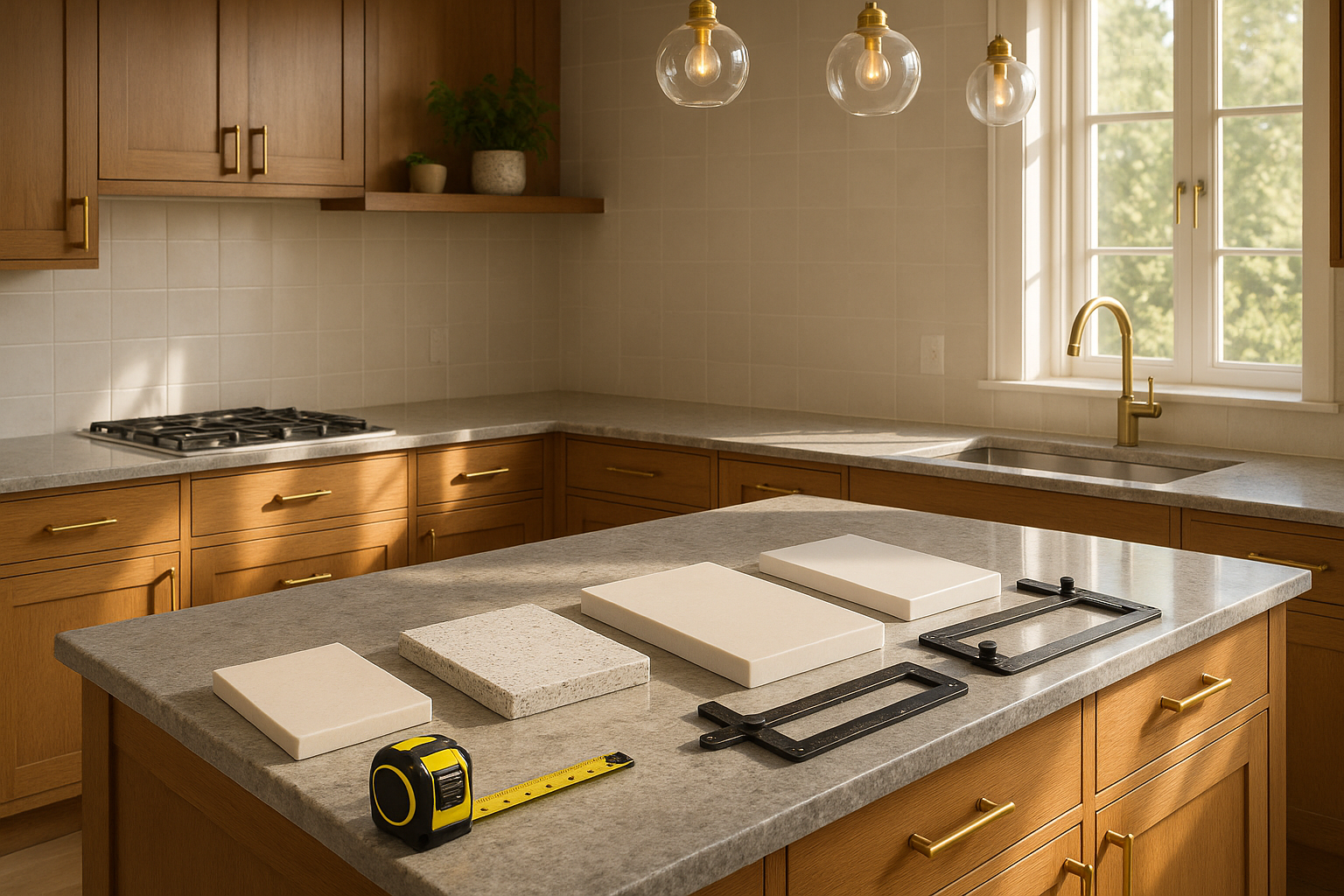
Thinking about new kitchen worktops? Discover when granite shines, how it compares to quartz, porcelain and Corian, and simple steps to choose with confidence.
Start strong: you want a kitchen that can handle weeknight rush, weekend baking, and still look effortlessly beautiful. Granite kitchen worktops deliver that solid, natural elegance—without the preciousness. If you're deciding on new kitchen worktops and want clarity fast, you're in the right place. Ready to take the next step? Request your free worktop quote to see tailored options near you.
Quick summary: choosing new kitchen worktops
- Granite: heat-tolerant, scratch-resistant, timeless; reseal periodically for best stain resistance
- Quartz: ultra-consistent colours (hello, white quartz worktop), very low upkeep; avoid direct high heat
- Porcelain: thin, tough, UV-stable; excellent for indoor–outdoor and modern profiles
- Corian: seamless and repairable; softer feel, best for integrated sinks and curves
- Steps: set budget, match lifestyle, view slabs, sample at home, book professional templating
Why granite kitchen worktops still lead the pack
If you crave authentic stone with natural movement and depth, granite is hard to beat. It offers confident heat resistance, impressive durability against everyday cuts, and a long lifespan with simple care. Most granites benefit from periodic resealing—quick to do and well worth the protection. Choose polished for mirror-like richness, or honed for a soft, modern sheen.
Comparing kitchen work surfaces: quartz, porcelain, Corian
- Quartz kitchen worktops: Engineered for consistent colour and minimal maintenance. A white quartz worktop pairs cleanly with oak, navy, or charcoal cabinets. It’s tough but not a fan of direct high heat—use trivets.
- Porcelain kitchen worktops: Ultra-compact and UV-stable, porcelain keeps its colour in sunny spaces and even outdoors. It’s thin yet strong, highly scratch- and heat-resistant, and perfect for sleek, modern lines.
- Corian kitchen worktops: Seam-free joins, coved upstands, and integrated sinks deliver a minimalist look. It’s warm to the touch and repairable, though more prone to surface scuffs than stone. Great for fluid curves and family-friendly practicality.
How to choose granite kitchen worktops in 5 clear steps
1. Match material to your lifestyle
Love cast-iron cooking and lively hosting? Granite or porcelain excel. Prefer flawless uniformity and easy upkeep? Quartz is a winner. Want integrated sinks and silky seams? Consider Corian.
2. Define budget and timeline
Set a realistic spend including templating, cut-outs, upstands, and installation in your area. Simpler edges and fewer seams usually save.
3. Decide on finish and thickness
Pick polished for shine and drama, or honed/leathered for a soft, tactile feel. Standard 20–30 mm thickness works for most kitchens; porcelain can go thinner for a crisp, modern aesthetic.
4. View slabs and sample at home
See full slabs for granite’s natural veining and bring samples home to test with cabinet doors and lighting—especially if you’re eyeing a white quartz worktop.
5. Book professional templating and fitting
Accurate templating ensures perfect seams, overhangs, and appliance clearances. Skilled installers protect cabinets, align joints, and finish edges cleanly. Want tailored help picking materials and finishes? Request your free worktop quote and get expert guidance.
Granite kitchen worktops costs and care
Costs vary by stone rarity, thickness, edge detail, and complexity (sinks, hobs, curves). To care: wipe with pH-neutral cleaner, reseal as recommended, and use boards and trivets to keep the finish pristine. Granite laughs off everyday heat, but trivets help protect sealers and ensure a long, even sheen.
Granite kitchen worktops FAQs
Are granite kitchen worktops worth it compared with quartz?
Yes—if you value natural character and resilient heat performance. Quartz wins on colour consistency and minimal upkeep; granite wins on authentic stone beauty and high heat tolerance.
Do granite worktops stain or need sealing?
Most granites resist stains well, and periodic sealing boosts protection. Wipe spills promptly and clean with gentle products to keep the surface looking new.
Can I put hot pans directly on granite?
Brief, moderate heat is usually fine, but a trivet protects both the stone’s sealer and your finish long-term—smart habit, minimal effort.
Which is the most durable for busy families?
For all-round toughness, porcelain and granite lead. For low maintenance and uniform looks, quartz excels. Corian shines for seamless design and easy repairs.
How long does installation take near me?
After templating, fabrication typically takes 1–2 weeks, with installation usually done in a day for standard kitchens. Timelines vary by project complexity and your local team’s schedule.
Choosing granite kitchen worktops with confidence
Granite kitchen worktops bring elegant strength to everyday life—cooking, coffee, celebrations, and everything in between. Now you know how they compare to quartz, porcelain, and Corian, you can choose a finish that fits your style, timeline, and budget. When you’re ready, request your free worktop quote for expert, friendly guidance—and enjoy a kitchen that feels as good as it looks.