Granite kitchen worktops: a smart, stylish upgrade
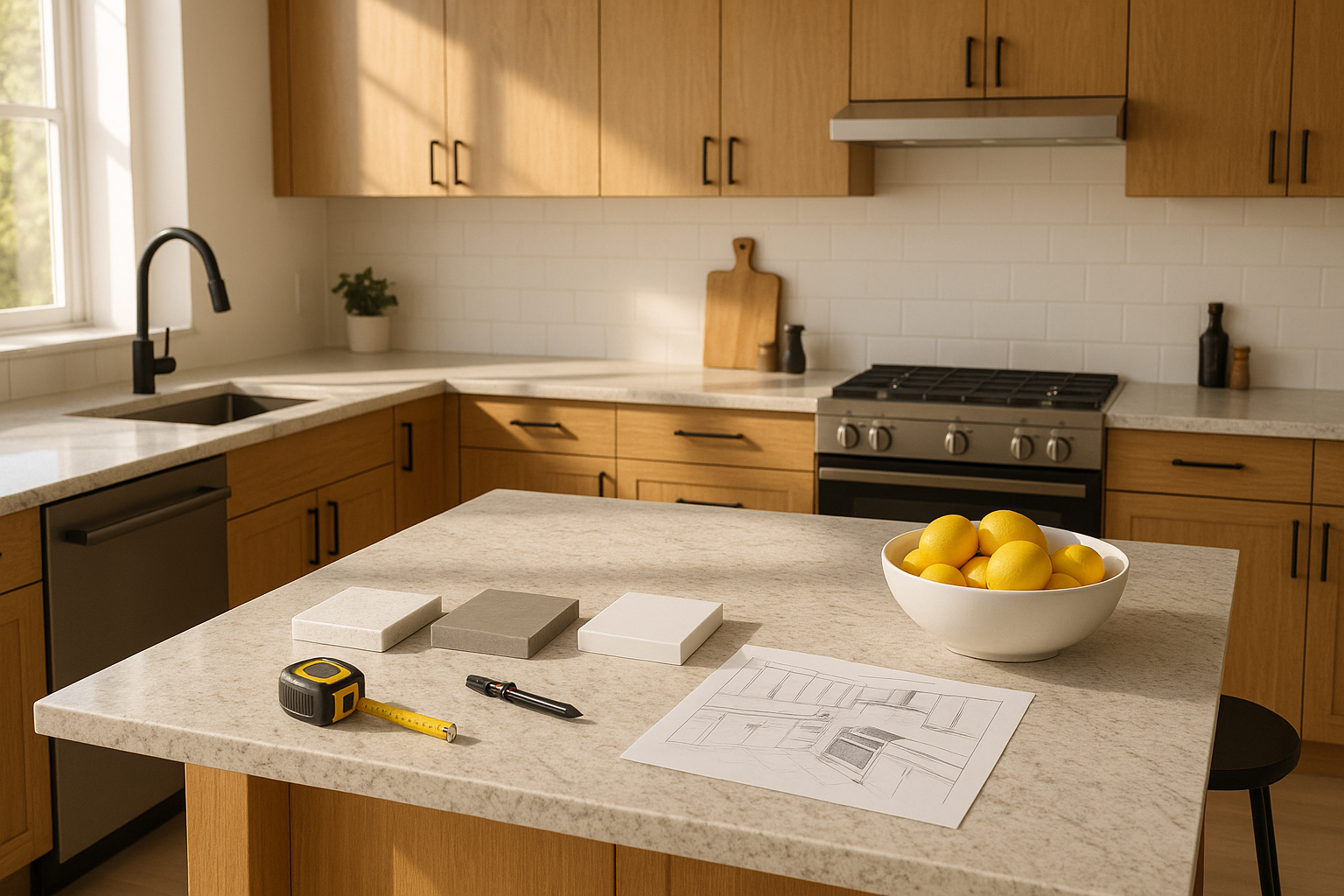
Thinking about granite kitchen worktops? Compare them with quartz, porcelain, and Corian, get care tips, and learn how to choose the right surface with confidence.
Your kitchen deserves a surface that can keep up with real life. If you’re weighing up options, granite kitchen worktops deliver timeless style, everyday toughness, and long-term value. In this guide, we break down how granite stacks up against quartz, porcelain, and Corian so you can choose with confidence—and start planning your upgrade. Ready to take the next step? Get a free quote to explore finishes, edging, and installation timelines near you.
Quick summary: granite kitchen worktops at a glance
- Hardwearing and heat-tolerant surface that handles daily cooking with ease
- Naturally unique veining and colors for one-of-a-kind kitchens
- Lower maintenance than you think with simple sealing and cleaning
- Strong alternative to quartz kitchen worktops, porcelain, and Corian depending on style and use
- Great for resale value when planning new kitchen worktops
Comparing granite kitchen worktops with quartz, porcelain, and Corian
Choosing between premium kitchen work surfaces? Here’s how the heavy-hitters differ:
- Granite vs quartz: Granite is naturally unique and more heat-tolerant. Quartz kitchen worktops are non-porous and ultra-consistent in color, with excellent stain resistance.
- Granite vs porcelain: Porcelain is very thin yet exceptionally scratch- and heat-resistant. It offers large-format slabs with minimal joints, but edges can chip if knocked hard.
- Granite vs Corian: Corian kitchen worktops (solid surface) enable seamless joins and integrated sinks, with a smooth, warm touch. They’re more prone to heat damage but can be refinished.
Best for you if you value:
- Granite: Natural beauty, heat tolerance, distinctive patterns
- Quartz: Low maintenance, uniform tones, busy households
- Porcelain: Sleek minimalism, thin profiles, high performance
- Corian: Seamless look, integrated shapes, easy repairs
Curious what suits your home and budget? Get a free quote and compare samples in your area.
Designing new kitchen worktops that last
Plan your upgrade in clear, practical steps:
1. Map your layout and usage
- Note zones: prep, cooking, baking, serving
- Identify hotspots for pans and appliances
- Allow generous landing space beside hobs and sinks
2. Choose finish, color, and edge detail
- Finishes: polished (gloss, reflective) or honed (matte, velvety)
- Edges: pencil, bevel, or ogee—pick for safety, style, and cleaning ease
- Consider splashbacks or upstands for a cohesive look
3. Weigh practicalities and maintenance
- Granite: periodic sealing keeps stains at bay
- Quartz: daily wipe-downs; avoid high heat direct contact
- Porcelain: slim profiles; confirm bracket support for breakfast bars
- Corian: avoid scorching; appreciate refinish potential
4. Plan installation and lead times
- Templating after cabinets are fixed and level
- Typical timelines: template to fit in 1–3 weeks (varies by supplier and location)
- Confirm access routes for large slabs, especially islands
White quartz worktop vs granite in busy homes
If you love a white quartz worktop for its crisp, modern vibe, consider:
- White quartz: ultra-clean, uniform tone; great stain resistance; use trivets for hot pans
- Light-toned granite: adds organic movement and subtle warmth; better with heat; sealing recommended
- For families and rental properties, both are excellent—choose based on desired look and how much variation you want in the pattern
Costs and care for granite kitchen worktops
- Pricing varies by slab rarity, thickness, edging, cut-outs, and region. Request itemized quotes for clarity.
- Care is simple:
- Wipe daily with a mild cleaner
- Use cutting boards to protect knives and finish
- Seal as advised (often annually or per supplier guidance)
- Longevity: With basic care, granite remains beautiful for decades, supporting strong resale value
Have measurements or a mood board ready? Get a free quote to compare granite, quartz, porcelain, and Corian side by side.
Granite kitchen worktops FAQs
Are granite kitchen worktops worth it?
Yes—granite blends durability, heat tolerance, and natural beauty, which supports long-term value and a premium finish in most kitchens.
How do granite kitchen worktops compare to quartz kitchen worktops?
Granite is natural, unique, and better with heat. Quartz is engineered, highly stain-resistant, and color-consistent. Choose by look, maintenance preference, and heat habits.
Can I put hot pans directly on granite?
Granite handles heat well, but using trivets protects the finish and avoids thermal shock at seams—good practice for any surface.
What thickness works best for kitchen work surfaces?
Common choices are 20 mm and 30 mm. Thicker profiles feel more substantial; thinner profiles create a sleek, modern look—confirm support for overhangs.
How much maintenance do granite worktops need?
Routine wiping and periodic sealing (per supplier guidance). It’s low-effort care that keeps the stone looking its best.
Choosing the right granite kitchen worktops for your home
From family-friendly practicality to show-stopping natural stone, granite kitchen worktops make a confident, long-term upgrade. Compare them with quartz, porcelain, and Corian, gather a couple of quotes, and trust your eye for the finish that feels like home. When you’re ready, get a free quote to move from ideas to installation with calm, clear next steps.