Bathroom vanity worktops: granite, marble, quartz, or porcelain?
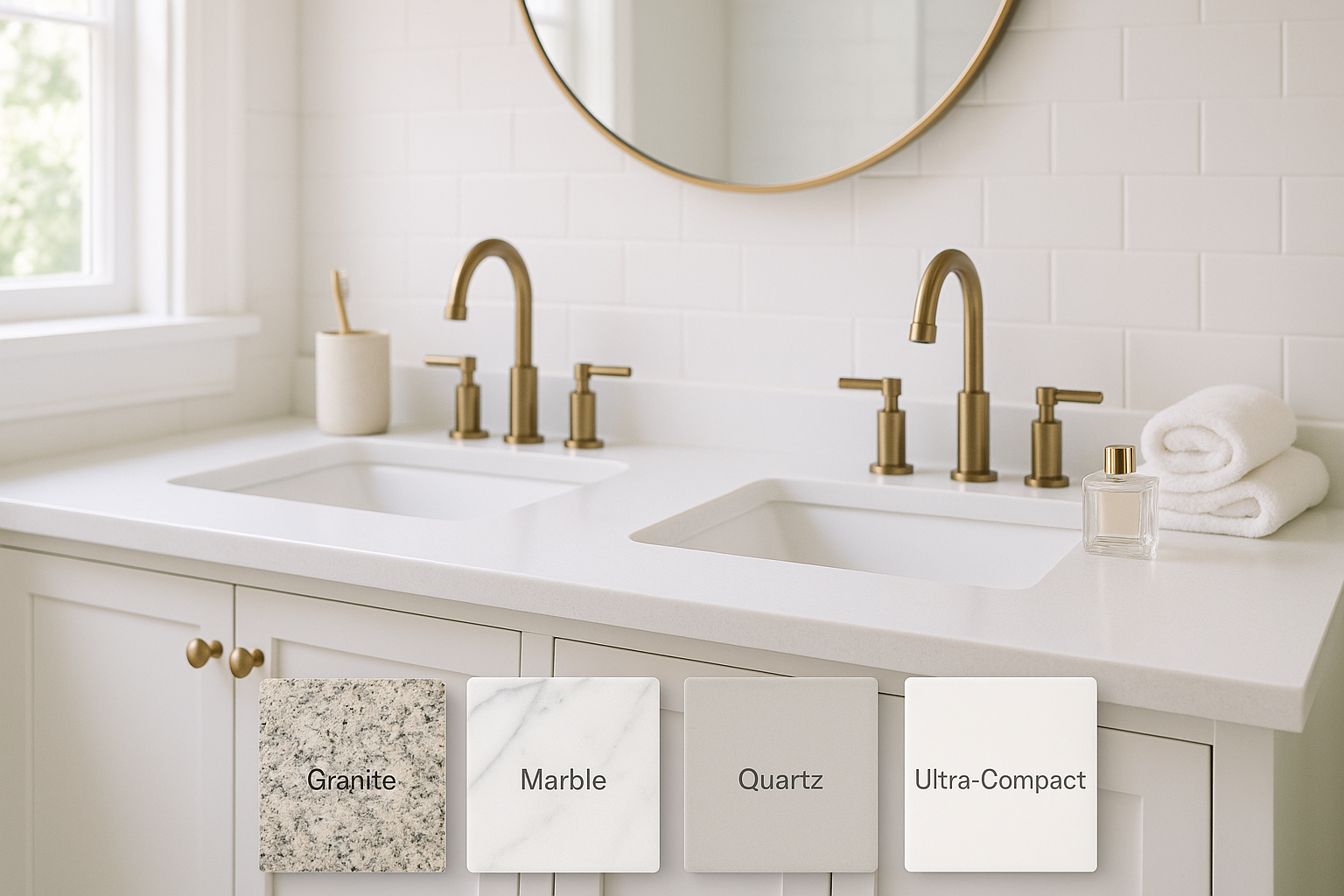
Looking at bathroom vanity worktops? Compare granite, marble, quartz, and porcelain—pros, cons, care, and how to choose—so you get beauty and durability without the fuss.
Bathroom vanity worktops: granite, marble, quartz, or porcelain?
Good mornings start at the sink. If your countertop is stained, high-maintenance, or just not your style, choosing the right bathroom vanity worktops can turn daily routines into mini spa moments—without the upkeep headache. Below, we compare the big four (granite, marble, quartz, and porcelain) so you can pick a surface that looks stunning and lives easily.
Ready to explore options matched to your space? Book a free design consultation to see finishes, samples, and pricing near you. For neutral guidance while you browse, check out this independent countertop buying advice.
Quick summary: how to choose bathroom vanity worktops
- Granite: tough, unique patterns, needs periodic sealing; great for family bathrooms
- Marble: luxe and classic; expect patina from etching; best for low-traffic or careful owners
- Quartz: low-fuss, consistent look, non-porous; avoid harsh heat but perfect for busy homes
- Porcelain: ultra-thin, UV/stain/heat resilient; sleek modern style with professional install
Granite bathroom worktops: the hardy natural choice for vanities
Granite brings natural beauty and serious durability. Each slab is one-of-a-kind, so veining and flecks feel bespoke. It handles daily splashes, cosmetics, and warm hair tools with ease.
- Pros: heat tolerant, scratch resistant, wide color range, long lifespan
- Watch-outs: periodic sealing helps resist oils and dyes; use pH-neutral cleaners
- Best for: primary baths and family spaces where toughness matters
Marble bathroom worktops for spa-like vanity style
If your heart says boutique hotel, marble delivers that soft, luminous elegance. It’s naturally cool to the touch and pairs beautifully with brass, brushed nickel, or matte black.
- Pros: timeless luxury, veining with character, stays cool
- Watch-outs: can etch from acids (think skincare with AHAs) and may stain without diligent sealing; gentle care only
- Best for: ensuite retreats, guest baths, or homeowners who embrace a graceful patina
Quartz bathroom worktops: low-fuss vanity surfaces
Engineered quartz offers a non-porous, consistent look that shrugs off most bathroom messes. It’s a winner for busy households that want style without the stress.
- Pros: stain resistant, minimal maintenance, uniform colors/patterns, no sealing required
- Watch-outs: avoid high heat from tools straight off the plug; always use a mat
- Best for: everyday family baths, rentals, and minimalist designs
Porcelain bathroom worktops: sleek, strong, and ultra-thin
Sintered porcelain sheets create slim, modern profiles with exceptional resistance to stains, UV, and heat. You can even get convincing stone or concrete looks at a featherweight thickness.
- Pros: highly resistant to UV/heat/stains, thin yet strong, versatile finishes
- Watch-outs: needs pro fabrication (edge detailing and cutouts require skill); chips can be tricky to repair
- Best for: contemporary bathrooms, floating vanities, and bright spaces (it won’t yellow in sunlight)
How to choose bathroom vanity worktops in 3 steps
1. Map your morning routine
Do makeup spill tests in your head. Hot tools? Kids’ toothpaste art? The more action your vanity sees, the more you’ll value stain resistance and easy cleanup.
2. Match material to maintenance
Love the look of stone but not the upkeep? Quartz or porcelain keep life simple. Crave natural movement? Granite balances beauty and resilience. Marble is magical—just accept a lived-in patina and use gentle cleaners (see this practical stone care guide).
3. Confirm fit and finish
Measure depth, sink placement, and tap holes. Choose edge profiles (pencil, bevel, ogee) and decide on undermount vs. vessel sinks for splash control.
Want tailored advice for your space? Book a free design consultation to compare samples, edges, and installation timelines.
Bathroom vanity worktops FAQs
Do granite bathroom worktops need sealing?
Often, yes. Many granites benefit from periodic sealing to boost resistance to cosmetics and dyes. Frequency depends on the stone and usage—test with a few water drops to see if they darken the surface.
Are marble bathroom worktops high maintenance?
They need gentle cleaners and prompt wipe-ups. Marble can etch from acidic skincare and perfumes; sealing helps with stains but won’t stop etching. If you’re careful, marble rewards you with unmatched elegance.
Is quartz better than marble for busy bathrooms?
For most families, yes. Quartz is non-porous and low-maintenance, making it more forgiving in high-traffic spaces. Marble is a style statement that suits lighter use or owners happy with patina.
Is porcelain durable enough for vanity tops?
Absolutely. Porcelain is highly resistant to stains, heat, and UV, and its thin profile looks ultra-modern. Just ensure experienced fabrication and installation.
What affects the cost of bathroom vanity worktops?
Material, thickness, edge profile, sink cutouts, splashbacks, and local fabrication all influence price. Typically, quartz and granite sit mid-to-high, marble trends premium, and porcelain varies by brand and slab size.
Choosing the right bathroom vanity worktops for your home
Whether you want granite bathroom worktops for everyday durability, the romance of marble bathroom worktops, the simplicity of quartz bathroom worktops, or the sleek edge of porcelain bathroom worktops, the best choice fits your routine, design, and care preferences. For vetted installers near you, browse this network of trusted stone fabricators. Ready to move from scrolling to planning? Book a free design consultation and feel confident you’re choosing bathroom vanity worktops that look beautiful today—and for years of easy mornings ahead.